
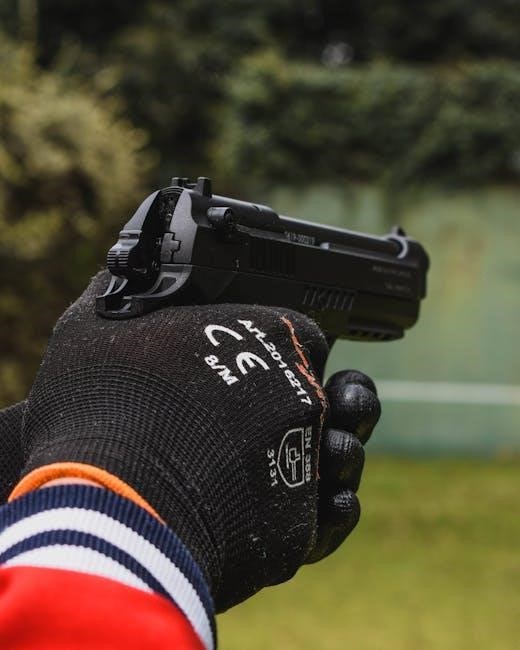
Glocks with Manual Safety: A Comprehensive Overview (Updated 02/17/2026)
Initially designed without traditional safeties to address police concerns regarding firepower and reload times in the 1970s, Glock has evolved. Recent models now incorporate manual safeties, responding to user demand and preferences for added control.
Historical Context: Why Glocks Initially Lacked Manual Safeties

The story of Glock’s absence of manual safeties is deeply rooted in the needs of law enforcement during the early 1970s. Police forces were increasingly dissatisfied with the limitations of their standard-issue .38 revolvers. These revolvers suffered from limited capacity – only six rounds – slow reloading, even with speedloaders, and concerns about stopping power. A shift towards semi-automatic pistols was desired, but existing designs often featured external safeties that officers found cumbersome and potentially problematic in high-stress situations.
The prevailing concern was that traditional safeties could be inadvertently engaged or disengaged during critical moments, or forgotten altogether by officers under duress. This could lead to delays in engaging a threat, potentially costing lives. Gaston Glock, when designing his pistol, aimed to create a firearm that was simple, reliable, and immediately ready for action. He believed that external manual safeties introduced unnecessary complexity and a potential point of failure.
Instead of relying on external controls, Glock focused on incorporating internal safety mechanisms, leading to the development of the “Safe Action” system. This system aimed to provide a high degree of safety without requiring the user to manipulate external safeties, offering a more intuitive and streamlined operation for law enforcement professionals.
The Shift Towards Manual Safety Options
Despite Glock’s longstanding philosophy against traditional manual safeties, a notable shift began to emerge in recent years, driven largely by market demand and evolving user preferences. While the “Safe Action” system remained a core feature, a segment of the shooting community, particularly those accustomed to 1911-style pistols or other firearms with manual safeties, expressed a desire for that additional layer of control.
This demand was particularly strong among civilian shooters and those who wished to utilize Glocks in competitive shooting disciplines where manual safeties were often required or preferred. The introduction of the Glock 19X in 2018 marked a pivotal moment. Originally designed for the U.S. Army’s Modular Handgun System (MHS) competition, the 19X featured a fully ambidextrous manual safety, signaling Glock’s willingness to adapt to changing needs.
Although initially a limited-run model, the 19X demonstrated that Glock could successfully integrate a manual safety without compromising the core principles of its design. This paved the way for subsequent models, like the Glock 47 MOS, to offer manual safety options, catering to a broader range of shooters and applications.
Glock’s Safety Philosophy: The “Safe Action” System
Glock’s foundational safety philosophy centers around its “Safe Action” system, a three-part mechanism designed to prevent unintentional discharges. This system, introduced with the Glock 17 in 1982, eliminates the need for an external manual safety lever in standard models. Instead, it relies on a combination of a trigger safety, firing pin safety, and drop safety features integrated directly into the pistol’s design.
The trigger safety requires a deliberate, conscious pull of the trigger to disengage, preventing accidental activation. Simultaneously, a spring-loaded firing pin block ensures the firing pin cannot move forward unless the trigger is fully depressed. Finally, a drop safety mechanism prevents the pistol from firing if dropped from any height.

Glock argued that traditional manual safeties could be inadvertently deactivated or forgotten by users under stress, potentially leading to negligent discharges. The “Safe Action” system, they believed, offered a more reliable and intuitive approach to firearm safety, requiring the user to actively engage the trigger for each shot, reinforcing safe handling practices. However, evolving demands led to the introduction of manual safety options in select models.

Components of the Glock “Safe Action” System
The Glock “Safe Action” system comprises three independent, passively engaged safety features working in unison. First, the trigger safety – a lever integrated into the trigger itself – must be consciously depressed before the trigger can move rearward. This prevents unintentional activation from impacts or snagging.
Secondly, the firing pin safety is a spring-loaded mechanism that physically blocks the firing pin from moving forward unless the trigger is fully and deliberately pulled. This ensures the pistol won’t fire even if dropped or subjected to significant force. It’s a crucial component, constantly engaged until the trigger action overcomes its resistance.
Finally, the drop safety serves as a last line of defense, preventing the pistol from firing if it’s dropped. This is achieved through a mechanical interlock that prevents the firing pin from reaching the primer even if the pistol experiences a substantial impact. These three components operate without requiring any manual manipulation from the user, offering a consistent safety profile.

The Glock 19X: A Key Development in Manual Safety Glocks
The Glock 19X marked a significant turning point, representing Glock’s first foray into offering a factory-produced pistol with a manual safety. Developed initially for the U.S. Army’s Modular Handgun System (MHS) competition, the 19X addressed requests for a more familiar safety feature from users accustomed to traditional designs.
This model featured an ambidextrous slide stop lever that also functioned as a manual safety. Engaging the lever locked the slide, preventing chambering of a round and effectively rendering the firearm safe. The 19X retained Glock’s “Safe Action” system, layering the manual safety on top of the existing passive safety mechanisms.
While the 19X wasn’t ultimately selected as the MHS winner, its introduction demonstrated Glock’s willingness to adapt to market demands and user preferences. It paved the way for subsequent models incorporating manual safeties, signaling a shift in Glock’s design philosophy and broadening its appeal to a wider range of shooters.
Glock MOS System and Aftermarket Safety Options
Glock’s Modular Optic System (MOS) provides a platform for mounting various optics, but also indirectly facilitates the addition of aftermarket manual safeties. While Glock doesn’t natively offer a wide range of manual safety options across all MOS models, the system’s design allows for customization.
Several aftermarket manufacturers produce manual safeties specifically designed for Glock MOS pistols. These typically involve replacing the existing slide stop lever with a modified version that incorporates a safety function. Installation generally requires gunsmithing expertise to ensure proper fit and function, maintaining the firearm’s reliability.
The availability of aftermarket safeties expands the options for Glock owners who desire this feature on their MOS pistols. However, it’s crucial to select reputable brands and ensure professional installation. Compatibility can vary depending on the specific MOS model and optic configuration, requiring careful consideration before purchase and installation. This allows users to tailor their Glock to their specific needs.
Benefits of a Manual Safety on a Glock
For many shooters, a manual safety offers an additional layer of security and peace of mind. While Glock’s “Safe Action” system incorporates internal safeties, a visible and tactile manual safety provides a clear indication of the firearm’s status – safe or ready to fire.
This is particularly appealing to individuals accustomed to traditional firearms with external safeties, easing the transition to the Glock platform. A manual safety can also be beneficial in scenarios where carrying concealed or storing a firearm requires an extra measure of prevention against accidental discharge.
Furthermore, a manual safety allows for positive control of the firearm during handling and manipulation, especially when holstering or unholstering. It provides a deliberate action to confirm the pistol is safe before performing other tasks. This added control can enhance confidence and reduce anxiety for some shooters, ultimately improving overall firearm safety and proficiency.
Drawbacks and Considerations of Adding a Manual Safety
Introducing a manual safety to a Glock necessitates a shift in operational procedures. Shooters accustomed to the “Safe Action” system must develop the muscle memory to consistently engage and disengage the safety during each draw and re-holster sequence. Failure to do so can hinder rapid deployment in a defensive situation.
Additionally, adding a manual safety introduces another potential point of failure. While modern safeties are generally reliable, any mechanical component can malfunction. Regular maintenance and inspection are crucial to ensure proper function. Some argue that the added complexity detracts from Glock’s renowned simplicity and reliability.
It’s also important to acknowledge that the addition of a manual safety alters the pistol’s ergonomics and may require adjustments to grip and handling techniques. Thorough training and practice are essential to mitigate these drawbacks and maintain proficiency with the modified firearm. Ultimately, the decision to add a manual safety is a personal one, weighing the perceived benefits against the potential challenges.
Training and Proficiency with a Manual Safety Glock
Effective training is paramount when transitioning to a Glock equipped with a manual safety. Drills must prioritize consistent and deliberate engagement and disengagement of the safety during every draw from the holster, presentation, and re-holstering procedure. This builds crucial muscle memory, preventing accidental discharges and ensuring swift access to the firearm when needed.
Live-fire exercises should incorporate scenarios mimicking real-world defensive situations, forcing shooters to operate under stress while maintaining proper safety protocols. Emphasis should be placed on transitioning between safe and fire modes smoothly and efficiently. Dry-fire practice is equally vital, allowing for repetition without ammunition costs.
Furthermore, training should address potential malfunctions related to the safety mechanism. Understanding how the safety functions and recognizing signs of failure are essential for responsible gun ownership. Regular practice and professional instruction are key to achieving and maintaining proficiency with a manual safety Glock, maximizing both safety and effectiveness.
Glock Models Currently Available with Manual Safety
As of February 17, 2026, Glock offers several models featuring a manual safety, primarily catering to law enforcement and security personnel, though increasingly available to civilian markets. The Glock 19X, initially developed for the U.S. Army’s Modular Handgun System (MHS) competition, stands out as a pivotal development, introducing the manual safety to a wider audience.
Expanding on this, the Glock 47 MOS is a dedicated manual safety option, built on the Modular Optic System platform, allowing for optic mounting. Various Glock MOS models, across different generations and calibers (9mm, .40 S&W, .45 GAP), are also available with the manual safety feature as a factory option. These MOS variants provide versatility for customization.

While not all Glock models currently include a manual safety, the trend indicates a growing commitment from Glock to offer this feature as a standard option on select platforms, responding to consumer demand and evolving operational needs. Availability may vary by region and retailer.
The Glock 47 MOS: A Dedicated Manual Safety Option
The Glock 47 MOS represents Glock’s first full-size pistol specifically designed with a manual safety as a standard feature, addressing a long-standing request from segments of the shooting community. Built on the Modular Optic System (MOS) platform, the 47 MOS allows users to easily mount a variety of red dot sights, enhancing target acquisition speed and accuracy.
This model features a traditional slide-mounted safety lever, providing a familiar control for shooters accustomed to 1911-style pistols or other firearms with external safeties. The Glock 47 MOS maintains the core Glock “Safe Action” system, incorporating internal safeties, but adds the external manual safety for an additional layer of control and peace of mind.
Chambered in 9mm, the Glock 47 MOS boasts a 17-round magazine capacity and a 4.49-inch barrel. It’s designed to appeal to both law enforcement and civilian shooters who prioritize the added security of a manual safety without sacrificing Glock’s renowned reliability and simplicity.
Legal Implications of Manual Safety Glocks

The introduction of Glock pistols with manual safeties has sparked nuanced legal considerations, primarily concerning state and local regulations regarding firearm safety features. Some jurisdictions historically mandated external safeties on handguns for law enforcement contracts or civilian sales, potentially creating barriers for standard Glocks.
The Glock 47 MOS, and potentially future models, now meet those requirements, opening up sales opportunities in previously restricted markets. However, the legal landscape varies significantly. States with “safe handgun” lists may require independent testing and certification to confirm the manual safety’s functionality and reliability.
Furthermore, the presence of a manual safety doesn’t automatically exempt a Glock from other restrictions, such as magazine capacity limits or bans on certain features. Owners should always verify local laws regarding carry permits, storage requirements, and permissible modifications. The legal implications are evolving, requiring ongoing awareness from both manufacturers and firearm owners.
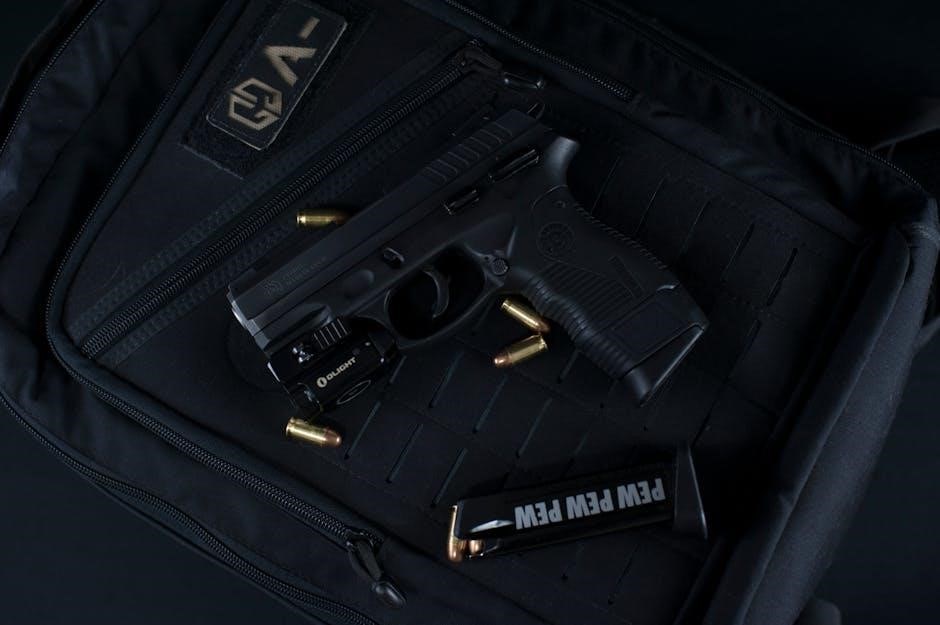
Comparison: Glock with Manual Safety vs. Traditional Safeties
Traditional safeties, commonly found on 1911s and many other pistols, typically block the trigger, hammer, or both, requiring deliberate manipulation to disengage; Glock’s approach with its manual safety differs, often integrating it as a frame-mounted lever affecting the trigger mechanism, similar to some SIG Sauer designs.
Unlike traditional systems, the Glock manual safety doesn’t necessarily prevent the trigger from being pulled, but rather inhibits the firing pin from releasing. This distinction impacts muscle memory and training protocols. Some shooters prefer the tactile and visual confirmation of a traditional safety, while others appreciate Glock’s streamlined integration.
Glock’s “Safe Action” system already incorporates internal safeties, leading some to question the necessity of a manual addition. However, proponents argue it provides an extra layer of security during carry or when handing the firearm to others. Ultimately, the choice depends on individual preferences and training, as both systems, when properly utilized, enhance firearm safety.

User Preferences and the Debate Over Manual Safeties
The introduction of manual safety options on Glocks has ignited considerable debate within the shooting community. Long-time Glock users, accustomed to the “Safe Action” system, often question the need for an additional control, citing the inherent safety features already present.
Conversely, shooters transitioning from platforms with traditional safeties frequently express a preference for the added tactile reassurance and visual confirmation a manual safety provides. This is particularly prevalent among law enforcement officers and those prioritizing an extra layer of security during carry. Concerns about accidental discharge, though statistically low with Glocks, fuel this demand;
Reddit discussions, like those on r/Glocks and r/liberalgunowners, highlight this divide. Some argue a decocker on a DA/SA pistol is preferable, while others actively request Glock to expand its manual safety offerings. Ultimately, the “best” system is subjective, dictated by individual training, comfort level, and perceived risk mitigation strategies.
Future of Glock and Manual Safety Integration
Glock’s trajectory regarding manual safeties appears poised for continued, albeit cautious, expansion. The initial release of the Glock 19X, and subsequently the Glock 47 MOS, demonstrated a willingness to adapt to market demands, despite a historical reluctance to deviate from the “Safe Action” philosophy.
Current online discussions suggest a strong consumer desire for more civilian-market models featuring manual safeties. While Glock has historically been hesitant to broadly implement changes, the sustained interest and feedback from users could influence future product development. It’s unlikely they’ll abandon the Safe Action system entirely, but offering more options seems probable.
Further integration could involve refining the placement and design of the safety lever for optimal ergonomics. Exploring modular options, like the MOS system, allowing users to add or remove safeties, also presents a viable path. The future likely holds a broader range of Glock pistols catering to diverse preferences regarding safety mechanisms.